How Immersive Technology Can Transform Online Learning
August 31, 2026
0
Online learning has made education more accessible, but it can still feel passive. Immersive technology changes that by allowing learners to interact with realistic digital environments instead of
Online learning has made education more accessible, but it can still feel passive. Immersive technology changes that by allowing learners to interact with realistic digital environments instead of simply watching videos, reading slides or completing quizzes.
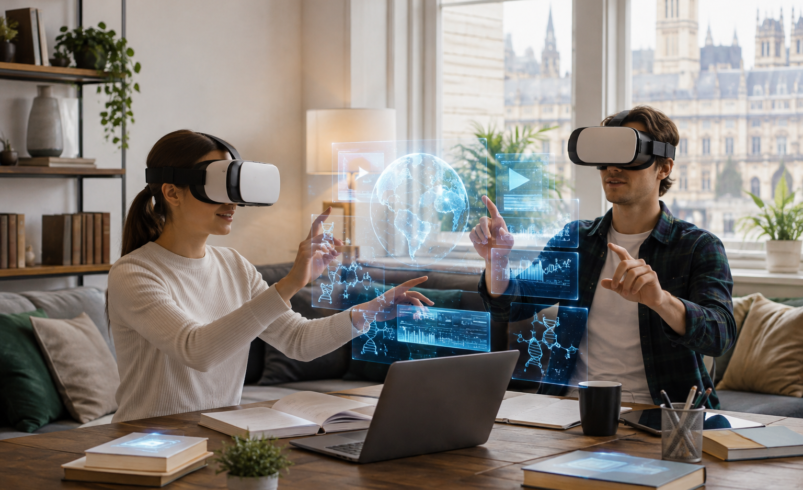
Virtual reality (VR), augmented reality (AR), mixed reality (MR) and extended reality (XR) can turn an online lesson into a practical experience. Learners can explore a virtual laboratory, practise a medical procedure, visit a historical location or develop workplace skills in a simulated environment.
The important point is that immersive technology should support a clear learning objective. The Marketing Technology News itself is not the lesson.
What Is Immersive Technology?
Immersive technology is a group of digital technologies that creates interactive experiences where learners can feel present inside, or connected to, a digital environment.
The main technologies include:
Virtual Reality (VR): Places learners inside a fully digital environment.
Augmented Reality (AR): Adds digital information or objects to the real world.
Mixed Reality (MR): Allows physical and digital elements to interact.
Extended Reality (XR): An umbrella term covering VR, AR and MR.
Immersive 3D environments: Allow learners to explore digital spaces using computers, tablets or headsets.
Research increasingly treats these technologies as learning environments rather than simply new forms of educational media.
How Immersive Technology Can Transform Online Learning
Traditional online courses often rely on videos, presentations, articles and multiple-choice assessments. These formats are useful, but they cannot always reproduce practical experience.
Immersive learning adds another layer: learning by doing.
1. Makes Online Learning More Interactive
Instead of watching a demonstration, students can interact with a simulated environment.
For example, a biology student could explore a 3D human heart and examine its structures from different angles. A technical student could practise operating equipment inside a virtual workshop.
This can make difficult or abstract subjects easier to visualise. Reviews of immersive learning have reported positive effects on engagement and, in many contexts, learning performance.
2. Brings Practical Training Online
One of the biggest limitations of online education is the lack of hands-on practice.
Immersive technology can provide simulations for situations that are expensive, dangerous or difficult to reproduce physically.
Examples include:
Medical and healthcare training
Engineering laboratories
Safety training
Emergency response
Manufacturing
Aviation
Language practice
Workplace onboarding
Science experiments
This is particularly valuable when learners need to practise a process before performing it in the real world.
3. Helps Students Understand Complex Concepts
Some concepts are difficult to explain with a textbook or two-dimensional diagram.
Immersive environments can provide spatial and visual representations that students can explore themselves.
For example, learners can examine molecules, travel through historical environments, explore geological structures or investigate engineering designs in 3D.
Research in STEM education has found that VR and AR can support comprehension, engagement and interactive learning, although the effectiveness varies according to the learning design and context.
4. Creates More Experiential Learning
Immersive technology supports experiential learning because students can interact with a situation rather than simply receive information about it.
A language learner could enter a virtual restaurant and practise ordering food. A business student could participate in a simulated negotiation. A medical student could work through a simulated patient scenario.
The learner becomes an active participant.
5. Makes Online Learning More Memorable
Immersive experiences can create a stronger sense of presence than conventional online content.
That does not mean every VR lesson will automatically produce better results. Evidence shows that some immersive learning interventions Competitive advantage less immersive approaches, while others produce little difference. The quality of instructional design remains critical.
The best approach is therefore to use immersion where it adds genuine educational value.
Where Immersive Technology Works Best
Immersive learning is particularly useful when students need to see, practise, explore or experience something.
Learning area
Example
Healthcare
Simulated clinical procedures
STEM
Virtual laboratories and 3D models
History
Virtual historical environments
Languages
Realistic conversation simulations
Engineering
Virtual equipment and design environments
Business
Negotiation and leadership simulations
Safety
Emergency and workplace scenarios
Vocational training
Practical skills simulations
Online education research has specifically identified immersive technologies as useful for distance learning because they can introduce interaction and practical experiences that conventional online courses may lack.
The Role of AI in Immersive Online Learning
The next stage of immersive learning is not simply better graphics. It is the combination of AI and immersive technology.
AI can potentially help create more adaptive learning environments by:
Adjusting difficulty based on learner performance
Providing personalised feedback
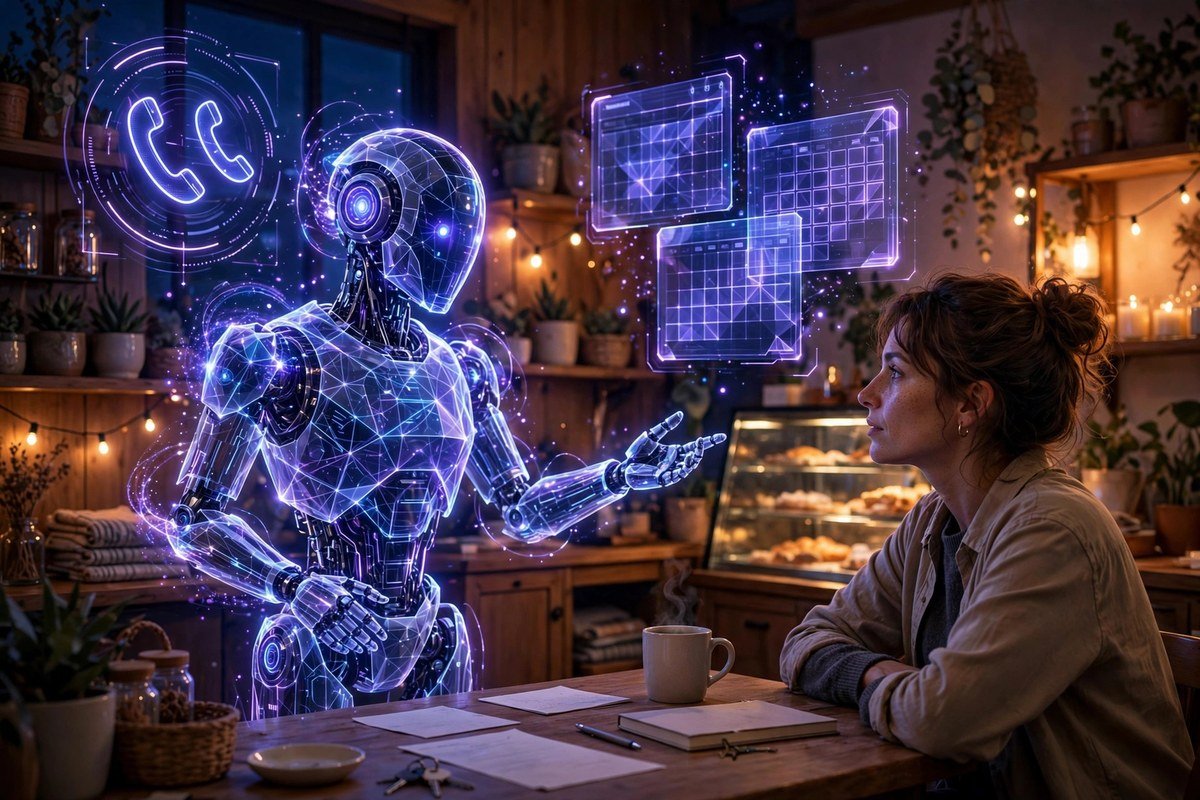
Creating conversational virtual tutors
Generating realistic practice scenarios
Tracking learning progress
Supporting adaptive assessments
Translating or localising learning content
Creating different scenarios for different skill levels
This creates an opportunity for online courses to become more responsive rather than giving every student exactly the same experience.
However, AI should support the teacher and learning objectives rather than replace sound instructional design.
Immersive Technology Is Not Just VR Headsets
A common mistake is assuming immersive learning requires expensive VR equipment.
It does not.
An effective strategy can combine:
Smartphone-based AR
Browser-based 3D environments
Desktop simulations
360-degree video
Interactive virtual laboratories
VR headsets where appropriate
This creates a more inclusive model because learners without a headset can still access an alternative version of the lesson.
That matters for online education, where students may have different devices, internet connections, budgets and accessibility requirements.
Challenges of Immersive Technology in Online Learning
Immersive technology has significant potential, but organisations should not ignore its limitations.
Cost and Infrastructure
Hardware, software, content development, maintenance and technical support can increase costs.
Internet connectivity and device performance can also affect the learning experience.
Accessibility and Inclusion
Not every learner can comfortably use a headset or interact with a particular virtual environment.
Accessibility needs to be considered from the beginning, including alternative controls, captions, audio options, readable interfaces and non-headset alternatives. Recent research also highlights equity, privacy and accessibility as important issues in immersive education.
Cybersickness and Digital Fatigue
Some users experience dizziness, nausea, fatigue, headaches or discomfort during immersive experiences.
These issues should be addressed through appropriate session lengths, comfortable movement design and user controls. Recent research continues to identify cybersickness and cognitive overload as practical concerns.
Teacher Training
Teachers need more than technical instructions.
They need to understand:
When immersive learning is appropriate.
How to connect it to the curriculum.
How to guide students during the experience.
How to assess learning afterwards.
Recent classroom research also identifies teacher support, curriculum integration, infrastructure and technical skills as important adoption factors.
Privacy and Data Protection
Immersive platforms can potentially collect more information about users than conventional learning systems.
Educational organisations should consider data minimisation, consent, security, platform policies and applicable privacy regulations before deployment.
How to Implement Immersive Technology Successfully
A successful online learning programme should not begin with the question, “Which VR headset should we buy?”
Start with the learning problem.
Step 1: Define the Learning Objective
Identify what students need to understand or practise.
Step 2: Decide Whether Immersion Adds Value
If a normal video or interactive diagram achieves the same result, expensive immersive technology may not be necessary.
Step 3: Choose the Right Technology
Use AR, VR, MR, XR, 3D or browser-based experiences according to the learning objective and learner requirements.
Step 4: Build a Short Pilot
Test the experience with a small group before rolling it out to an entire course.
Step 5: Provide Alternatives
Give learners a suitable non-headset or lower-specification option wherever possible.
Step 6: Measure Learning Outcomes
Do not measure success only through usage or engagement.
Track:
Knowledge retention
Assessment performance
Skill development
Completion rates
Learner confidence
Practical performance
Accessibility
Learner satisfaction
Step 7: Improve the Experience
Use learner feedback and performance data to improve the content.
This approach makes immersive technology part of a learning strategy rather than an expensive technology demonstration.
What the Research Says
Current research is encouraging but not entirely uniform.
A systematic review of immersive VR studies found that most included studies reported advantages over less immersive methods, while some found no significant difference.
More recent reviews similarly report positive effects on engagement and learning in many contexts, while highlighting cost, accessibility, teacher preparation, technical limitations and instructional design as continuing barriers.
The practical lesson is simple:
Immersive technology can improve online learning, but immersion alone does not guarantee better education.
The strongest results are likely when the technology is aligned with the subject, learning objective, learner needs and assessment strategy.
The Future of Immersive Online Learning
The future is likely to move towards more personalised, collaborative and intelligent immersive environments.
AI could make virtual learning spaces more adaptive. Cloud technologies can make immersive content easier to deliver. Improved devices may reduce barriers related to cost and usability.
At the same time, education providers will need to focus on accessibility, privacy, digital wellbeing and equitable access.
The goal should not be to make every online lesson immersive.
The goal should be to make learning more effective, practical and meaningful when immersion provides a genuine advantage.
It can turn passive online content into interactive learning experiences.
VR is particularly useful for simulations and practical training.
AR can bring digital information into real-world environments.
Immersive learning can help learners visualise complex concepts.
AI can make immersive experiences more adaptive and personalised.
Hardware is not always necessary because browser, mobile and 3D experiences can also be used.
Accessibility, privacy, cost and cybersickness must be considered.
Teacher training and instructional design are essential.
Learning outcomes should matter more than technology novelty.
Conclusion
Immersive technology can transform online learning by changing how students experience information, practise skills and interact with digital learning environments.
VR, AR, MR and XR can make difficult concepts more tangible and provide practical experiences that traditional online courses often struggle to reproduce.
But the technology should never become the focus of education.
The strongest approach is to identify the learning objective first, choose the appropriate immersive method, provide accessible alternatives and measure whether students actually learn more effectively.
Used in this way, immersive technology has the potential to move online education from simply delivering information towards creating richer, more practical and engaging learning experiences.
Frequently Asked Questions
1. What is immersive technology in online learning?
Immersive technology in online learning uses tools such as VR, AR, MR and XR to create interactive digital learning experiences. Instead of only watching or reading content, learners can explore environments, practise skills and interact with simulations.
2. How can immersive technology improve online learning?
Immersive technology can improve online learning by increasing interaction, supporting experiential learning, visualising complex concepts and providing realistic practice environments. Its effectiveness depends on how well the technology is connected to learning objectives and teaching methods.
3. Is VR necessary for immersive learning?
No. VR is only one form of immersive technology. AR, browser-based 3D environments, simulations and 360-degree experiences can also provide immersive learning without requiring every student to own a VR headset.
4. What are the disadvantages of immersive technology in education?
Common challenges include hardware and development costs, accessibility barriers, technical problems, teacher training requirements, privacy concerns, cybersickness and cognitive overload.
5. What is the future of immersive technology in online learning?
The future is likely to combine immersive environments with AI, adaptive learning, virtual collaboration and personalised feedback. However, successful adoption will depend on affordability, accessibility, privacy, teacher support and evidence-based instructional design.