What Is Edge AI? Why Your Next Gadget Runs AI Without the Cloud
- October 22, 2026
- 0
What Is Edge AI and Why It Matters: How Your Next Gadget Runs AI Without the Cloud What is edge AI and why it matters for the gadgets

What Is Edge AI and Why It Matters: How Your Next Gadget Runs AI Without the Cloud What is edge AI and why it matters for the gadgets
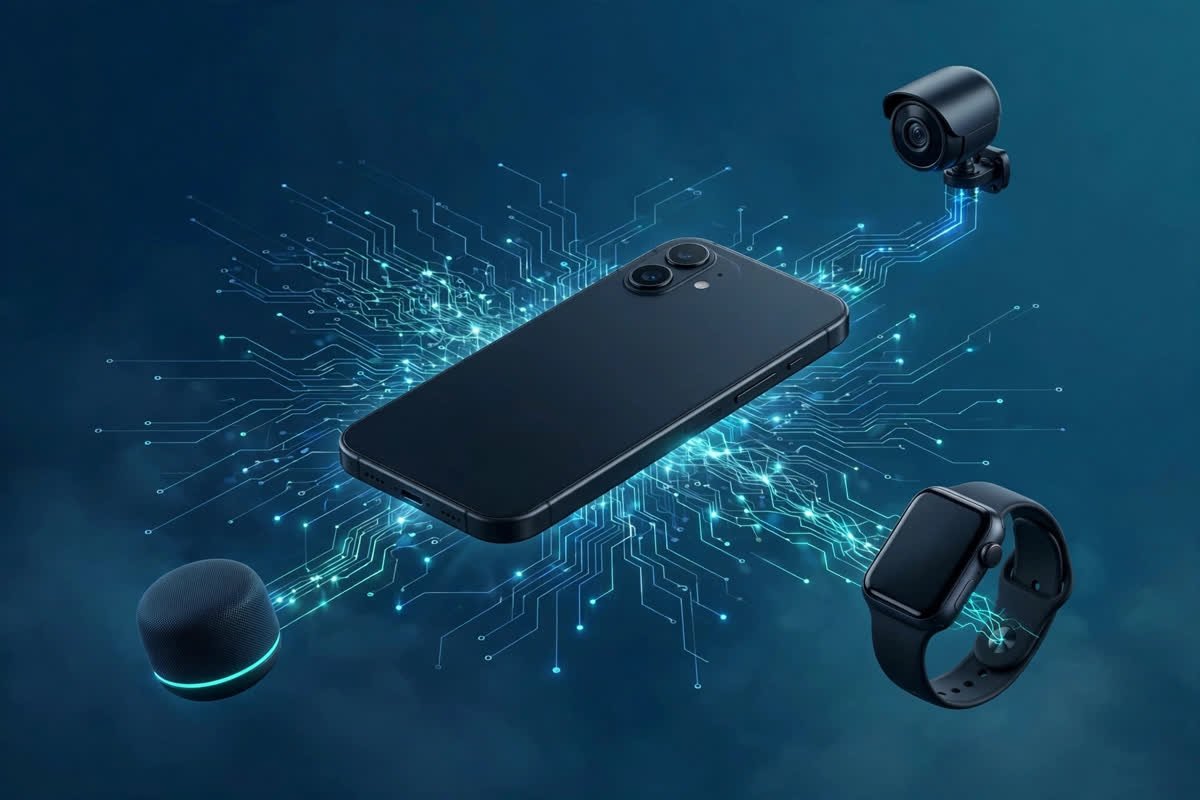
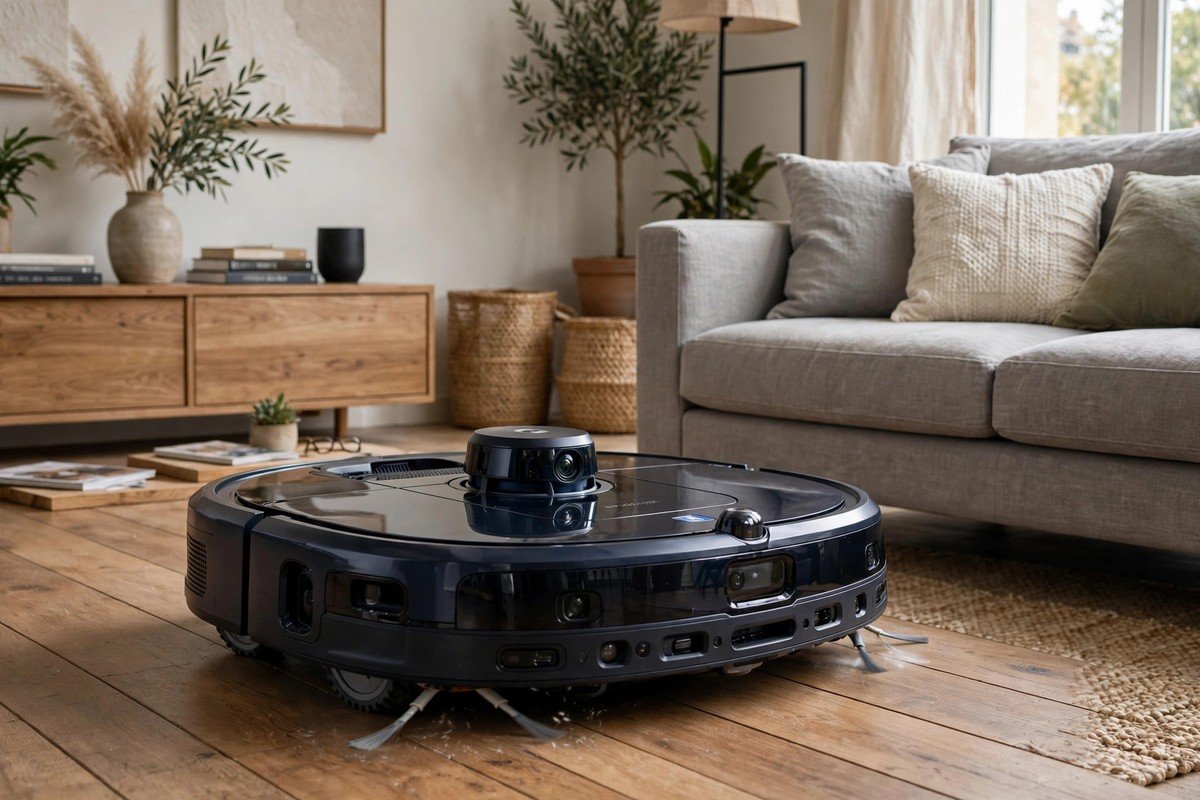
What is edge AI and why it matters for the gadgets you buy next? Edge AI is simply artificial intelligence that runs directly on your device, your phone, camera, car or smart speaker, instead of sending data to a distant cloud server for processing. Your face unlock works in a lift, your earbuds cancel noise in real time and your doorbell spots a parcel without uploading video, because the thinking happens on the device itself.

Here is a plain-English way to picture it. Cloud AI is like mailing every question to an expert and waiting for the reply. Edge AI is like hiring a trained assistant who sits at your desk: answers come instantly and nothing sensitive leaves the room, but the assistant works from a smaller, local memory.
In technical terms, edge AI moves inference, the moment a trained model makes a prediction, to the point where data is created. The heavy training still happens in a data centre or cloud on powerful hardware; the finished, compressed model is then deployed to the device. That device could be a phone with a dedicated neural chip, a security camera, a factory sensor or a car. This is closely related to running AI models locally, which is the same idea applied to desktop machines.
| Factor | Edge AI | Cloud AI |
|---|---|---|
| Response speed | Near instant; no network trip | Depends on your connection |
| Works offline | Yes | No |
| Privacy | Data stays on device | Data travels to servers |
| Bandwidth cost | Low; only results are sent | High for video and audio |
| Model size | Smaller, compressed models | The largest models available |
| Best for | Real-time, private, offline tasks | Maximum accuracy and scale |

1. Speed. Some decisions cannot wait for a round trip to the cloud. A self-driving car that must brake for a pedestrian, a factory robot that must stop near a worker or a surgical robot needs answers in milliseconds. Edge AI delivers them.
2. Privacy. Your face, voice and health data never have to leave the device to be useful. Face unlock, on-device dictation and fall detection on smartwatches keep sensitive readings local, which also helps companies meet data-protection rules.
3. Reliability. Cloud services go down; rural areas, aeroplanes and factory basements have patchy connectivity. A thermostat that keeps learning your routine during an outage is simply better.
4. Lower data costs. Streaming hours of security video to the cloud is expensive in bandwidth and storage. A smart camera that only sends an alert when it actually sees something cuts that cost to a fraction.
5. Scale. Analysts expect billions more connected devices this decade, and central networks cannot absorb every camera frame from all of them. As market research firm Grand View Research figures cited by IBM suggest, the edge AI market was valued near $25 billion in 2025 and could approach $119 billion by 2033, largely because intelligence is spreading to the devices themselves.
You probably use edge AI daily without realising. Phones run face unlock, live captions, photo enhancement and offline voice typing on the chip. Earbuds and speakers handle wake-word detection (“hey assistant”) and noise cancellation locally, because waiting for a server would feel broken. Smart cameras distinguish people, pets and parcels before deciding what to record. Cars use driver-assistance systems that react to obstacles in real time. AI PCs with built-in NPUs now run background blur, summarisation and local assistants without a network; our AI PC buying guide explains which chips matter.
Devices are far weaker than data centres, so models get squeezed before deployment. Three standard techniques make it possible: quantisation stores the model’s numbers at lower precision, shrinking it with only a small accuracy cost; pruning removes connections that contribute little; and knowledge distillation trains a small “student” model to imitate a large “teacher” model. The trend toward small language models is exactly this idea applied to chat assistants: capable enough to run on your phone, private enough to never phone home.
The other half is hardware. Phones and laptops now ship with NPUs, neural processing units built specifically for AI maths. Apple’s Neural Engine, Qualcomm’s Hexagon NPU and similar chips give ordinary devices the parallel grunt needed for real-time inference at low power.

Edge computing is the broader idea of running any computation near the data source; edge AI is the subset where the computation is a machine learning model. TinyML is the extreme low end of edge AI: very small models on tiny battery-powered microcontrollers. And federated learning is a training technique where many devices improve a shared model without sending their raw data anywhere. For a gentler start on the basics, see how artificial intelligence works.
Edge AI is not always the right answer. On-device models are smaller and can be less accurate than their cloud counterparts, and squeezing them onto specific chips takes real engineering effort. Updating and monitoring models across thousands of devices with different chips and OS versions is a hard operational problem. And a device can be lost or tampered with, which raises security questions the cloud never had. The practical rule: choose edge AI when latency, offline use, privacy or bandwidth genuinely demand it. If none of those pressures apply and you just want the most accurate answer, a cloud API remains simpler.
What is edge AI and why it matters comes down to this: edge AI puts intelligence where the data is born, on your phone, camera, car and watch, so answers arrive instantly, privately and even offline. It will not replace the cloud; the two work as a team, with training in the cloud and fast decisions at the edge. But the next time your gadget responds before your connection could have, you will know why.
Edge AI runs AI models on the device itself instead of a remote server, and it matters for privacy because sensitive data like your face, voice or health readings can be processed locally and never uploaded. Fewer copies of your data travelling the internet means less exposure to breaches and easier compliance with data-protection rules.
No. Edge computing means running any computation near the data source. Edge AI is specifically the part of edge computing that runs machine learning models. Every edge AI system is edge computing, but plenty of edge computing, like local caching or file sync, has no AI in it at all.
No, that is one of its main strengths. Once the model is installed on the device, inference runs fully offline. Devices may still phone home occasionally to send summaries or receive model updates, but they do not depend on that link to function. Read more in IBM’s edge AI explainer for the enterprise view.
Smartphones (face unlock, live captions, on-device assistants), earbuds and smart speakers (wake words, noise cancellation), security cameras (person and parcel detection), wearables (fall and heart-rhythm alerts), cars (driver assistance and autonomy) and AI PCs with NPUs are the most common examples in 2026.
It improves data privacy but adds new risks. Data staying on device reduces interception and cloud-breach exposure, but a stolen or tampered device can expose the model itself, and models in the field are harder to monitor than cloud ones. Makers mitigate this with on-device encryption, signed model updates and tamper-resistant chips.