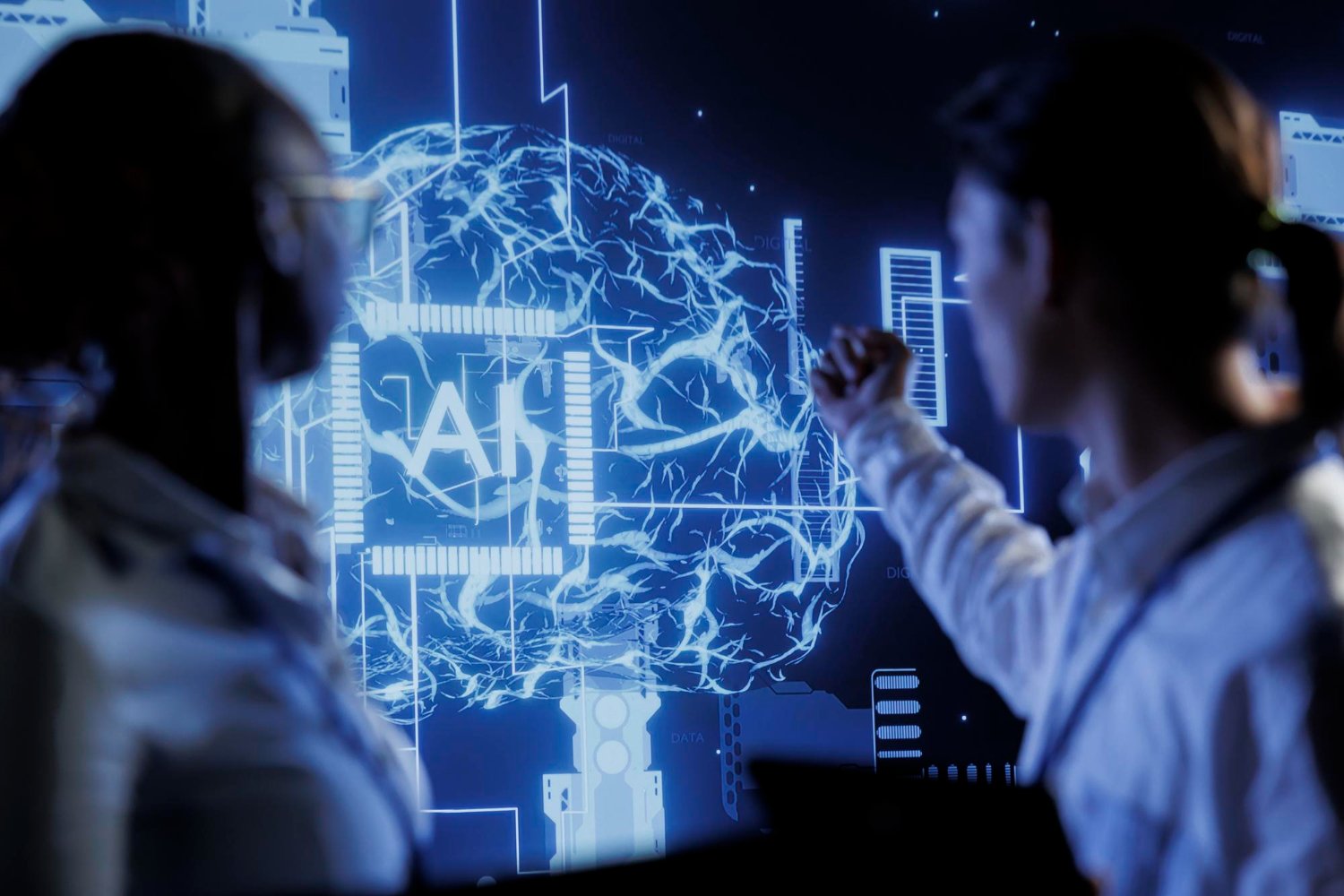
Artificial intelligence works by using data, algorithms, and computing power to recognise patterns and make predictions, without being explicitly programmed for every task. Instead of following fixed rules, AI systems learn from examples, adjust their internal parameters, and improve their accuracy over time. This is the short answer, but understanding how does artificial intelligence work in practice means looking at the building blocks behind the scenes: data, machine learning models, neural networks, and training.
I have spent years working with Artificial Intelligence Tools, from chatbots to recommendation engines, and the same core process shows up again and again. It starts with data, moves through learning, and ends with a system that can make decisions or generate content on its own.
What Is Artificial Intelligence, Really?
Artificial intelligence (AI) is a branch of computer science focused on building systems that can perform tasks normally requiring human intelligence. This includes recognising speech, understanding language, spotting patterns in images, and making predictions.
AI is not one single technology. It is an umbrella term that covers several related fields:
- Machine learning (ML): systems that learn from data rather than fixed instructions
- Deep learning: a subset of ML using layered neural networks
- Natural language processing (NLP): how machines understand and generate human language
- Computer vision: how machines interpret images and video
Each of these plays a different role, but they all rely on the same basic idea: learning from examples instead of hardcoded rules.
The Core Process: How AI Actually Learns
Most modern AI systems follow a similar workflow. Breaking it down step by step makes the whole idea far less abstract.
1. Data Collection
AI needs data to learn from. This could be text, images, audio, or numerical records. The quality and quantity of this data directly affects how well the system performs. Poor or biased data leads to poor or biased results, which is why data quality is one of the most important (and often overlooked) parts of the process.
2. Choosing a Model
A model is the mathematical structure that will learn from the data. Simple problems might use a basic algorithm like linear regression. More complex tasks, such as image recognition or language generation, Flow Automated Intelligence typically use neural networks with many layers, often called deep learning.
3. Training
During training, the model is shown data and asked to make a prediction. It compares its guess to the correct answer, calculates the error, and adjusts its internal parameters slightly to reduce that error. This happens millions of times. Gradually, the model gets better at spotting patterns.
This step is where terms like “weights,” “gradient descent,” and “backpropagation” come in. In simple terms, the model is fine-tuning itself based on feedback, much like a person improving at a skill through repeated practice and correction.
4. Testing and Validation
Once trained, the model is tested on new data it has not seen before. This checks whether it has actually learned general patterns, rather than just memorising the training examples.
5. Deployment and Inference
After testing, the model is deployed into a real application, such as a chatbot, a fraud detection system, or a recommendation engine. At this stage, it is making live predictions, known as inference, based on new inputs.
Types of AI Worth Knowing
Understanding how does artificial intelligence work also means knowing the different categories systems fall into:
- Narrow AI: designed for one specific task, such as spam filtering or voice recognition. This is what almost all AI in use today actually is.
- General AI: a theoretical system with human-level reasoning across many tasks. This does not exist yet.
- Generative AI: systems like large language models that create new text, images, or audio based on patterns learned from vast datasets.
Most tools people interact with daily, including search assistants and AI chat platforms, fall under narrow or generative AI.
Why Neural Networks Matter
Neural networks are loosely inspired by how neurons in the human brain connect and pass signals. They are made up of layers of nodes, each performing small mathematical calculations.
Data enters through an input layer, passes through one or more hidden layers where patterns are detected, and produces a result at the output layer. The more layers involved, the “deeper” the network, which is where the term deep learning comes from.
This structure is what allows AI to handle complex tasks such as recognising faces, translating languages, or generating coherent text.
Common Misunderstandings About AI
A few misconceptions come up often, so it is worth addressing them directly.
AI does not “think” the way humans do. It identifies statistical patterns in data. It does not have beliefs, intentions, or genuine understanding, even when its output sounds convincing.
AI is also not magic. Every result traces back to the data it was trained on. If that data contains errors or bias, the AI’s output can reflect those same flaws. This is why responsible AI development includes ongoing testing, human oversight, and transparency about limitations.
Real-World Examples of AI in Action
- Streaming services suggesting shows based on viewing history
- Email providers filtering spam automatically
- Voice assistants converting speech into text
- Fraud detection systems flagging unusual transactions
- Chatbots answering customer questions in real time
Each of these relies on the same underlying cycle: collect data, train a model, test it, then deploy it for real use.
Final Thoughts
So, how does artificial intelligence work? At its core, it works by learning patterns from data through repeated training, then applying those patterns to make predictions or generate new content. It is not magic and it is not human thinking. It is maths, statistics, and computing power applied at a huge scale.
As AI continues to develop, understanding this basic process helps Training Ai Models with Prompts separate genuine capability from hype, and makes it easier to use these tools sensibly and effectively.
Frequently Asked Questions
1. How does artificial intelligence work in simple terms?
AI works by learning patterns from large amounts of data, then using those patterns to make predictions or decisions, rather than following fixed, pre-written rules.
2. What is the difference between AI and machine learning?
AI is the broader concept of machines performing intelligent tasks. Machine learning is a specific method within AI where systems learn from data instead of explicit programming.
3. Does AI actually understand what it is saying?
No. AI systems, including language models, generate responses based on statistical patterns learned during training. They do not have genuine understanding or awareness.
4. What data does AI need to work properly?
AI needs relevant, accurate, and sufficiently large datasets. The quality of this data has a direct impact on how reliable and unbiased the results are.
5. Is AI the same as robots?
No. Robots are physical machines that may use AI to make decisions, but AI itself is software. Not all AI involves robotics, and not all robots use AI.