How Quantum Computing Will Change AI: What You Need to Know in 2026
October 15, 2026
0
How Quantum Computing Will Change AI: What You Need to Know in 2026 Wondering how quantum computing will change AI? You are not alone. Headlines promise a revolution,
How Quantum Computing Will Change AI: What You Need to Know in 2026
Wondering how quantum computing will change AI? You are not alone. Headlines promise a revolution, but the real 2026 story is subtler and, honestly, more interesting than the hype. This guide draws on tech press coverage from December 2025 to May 2026 and specialist reporting checked in October 2026. Where a result is still theoretical or simulation-only, we say so.
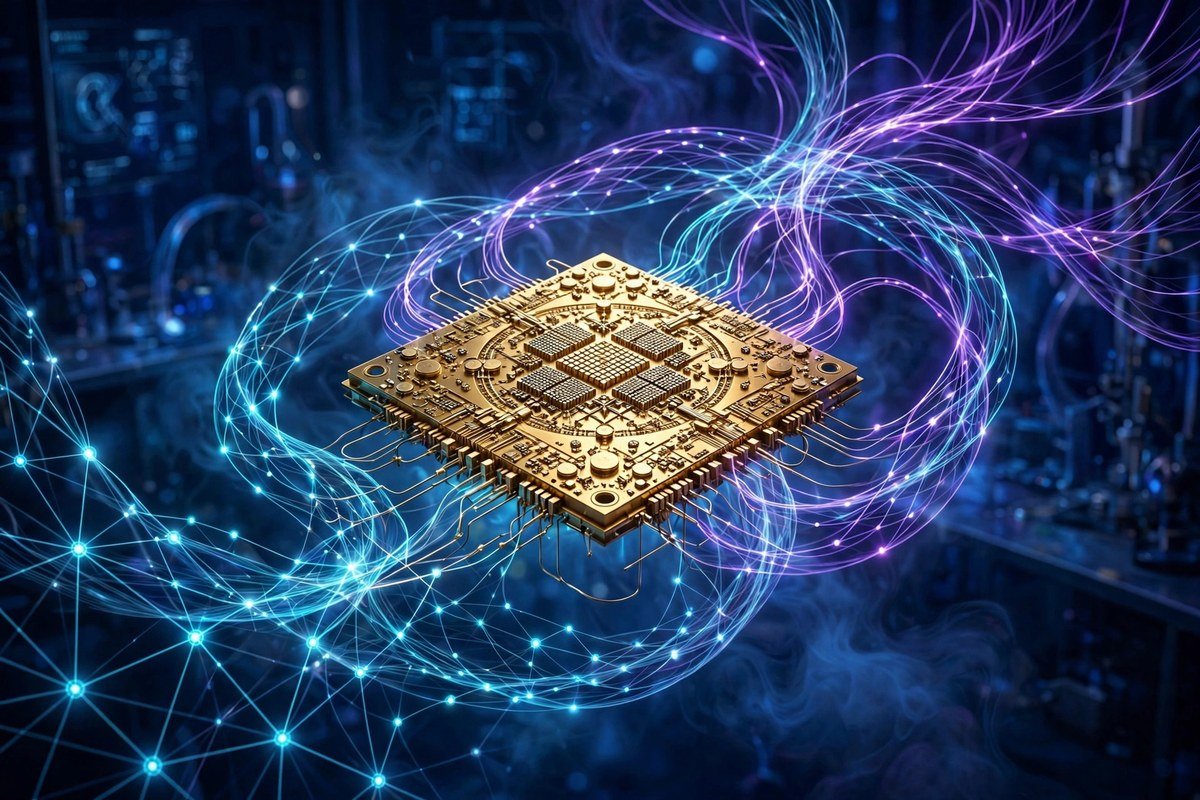
The relationship between these two technologies runs in two directions at once. Quantum computing could speed up AI, and AI is already helping quantum computers become more reliable. That feedback loop, where each technology makes the other more capable, is the genuine reason researchers are excited. It is also the frame this guide uses, because it separates what is happening from what is still on the whiteboard.
How quantum computing will change AI: the two directions
Direction 1 is quantum accelerating AI. Quantum machine learning algorithms (quantum SVM and quantum PCA are the two most-cited examples) are theoretically capable of exponential speedups, but only on specific problem types. The most practical near-term wins are in optimisation: tuning neural-network weights and searching for good hyperparameters, tasks that eat huge amounts of classical compute. In April 2026, researchers published theoretical work on “quantum oracle sketching” suggesting quantum methods could cut the data and memory needs of AI systems. That work sits at the theoretical and simulation stage, which matters for how much weight you give it.
Direction 2 is AI stabilising quantum. Today’s quantum processors are fragile: qubits lose their state in microseconds (decoherence), and the machines drift constantly. AI models now monitor qubit states in real time, predict and correct errors, manage the never-ending recalibration, and optimise how circuits are compiled onto the hardware. Los Alamos researchers have even shown that classical ML concepts such as Gaussian processes can be translated into quantum states. This direction matters because every gain here unlocks the first one.
Then there is the feedback loop between them. Better AI means better error handling, which means more reliable quantum hardware, which means faster quantum-assisted optimisation for AI. No single breakthrough is doing the work here. The loop itself is the story.
What actually happened in 2026
Strip away the press releases and three milestones from 2026 stand up:
Google’s below-threshold quantum error-correction demonstration (February 2026). Adding more qubits reduced the overall error rate, a concrete step towards fault tolerance. Note the phrasing: towards. Fault-tolerant machines are not here yet, and noise remains the core challenge.
The UCL quantum-informed model (April 2026). UCL researchers built a model that outperformed classical counterparts on prediction accuracy while using far less memory. The write-up quoted roughly 100x less memory. Treat that as the researchers’ claim, not a settled fact, and treat the result as a promising lab demonstration rather than a production result.
The memory-reduction theory work (April 2026). The arXiv work on quantum methods reducing AI memory needs is theoretical so far. For context on where that research came from, this quantum method that may reduce memory needs write-up explains the claims without overselling them.
None of these means quantum AI has “arrived”. They mean the field moved from promise to evidence on several fronts in one year. That is significant, just not a revolution.
The 2026 reality check: hybrid workflows win
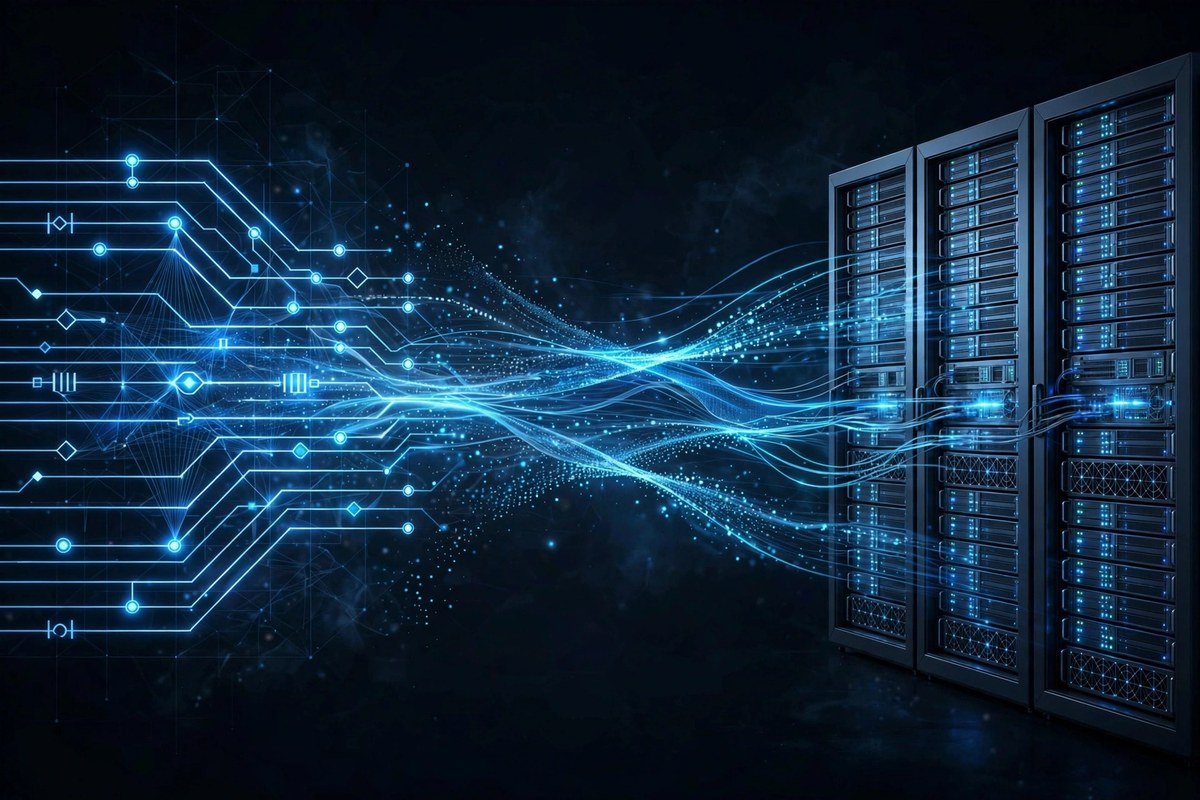
Here is the part that must not get lost: the dominant model in 2026 is hybrid quantum-classical workflows. Quantum processors handle the specialised tasks they are good at (optimisation, simulation, certain linear algebra). Classical systems do everything else, including running the AI models most people actually use.
This is not a temporary bridge to a fully quantum future. Even in optimistic scenarios, most AI workloads will stay classical because quantum hardware is expensive, noisy, and unsuited to general-purpose computing. What is changing is that the quantum slice of the workflow is getting more useful each year. For most readers, the practical takeaway is simple: you do not need a quantum computer, but the AI tools you use are starting to benefit from quantum-assisted research upstream. Our small vs large language models guide covers how model efficiency itself is improving on the classical side, and our guide to how much GPU you need covers the classical hardware end of the same story.
Qubits vs bits in one paragraph
A classical bit is either 0 or 1. A qubit can sit in a superposition of both at once, and linked qubits can share correlations (entanglement) that let certain computations explore many possibilities in parallel. That is the whole physics you need. Everything else in this article follows from one trade-off: that parallelism is extraordinarily powerful for specific problems and extraordinarily fragile in practice.
Quantum-inspired is not quantum hardware
One of the slipperiest claims in this space is calling something “quantum” when it ran on a classical computer. Quantum-inspired algorithms borrow quantum mathematics and run entirely on conventional hardware. Some are genuinely useful. They are not evidence that quantum hardware works, and an article that cites them as hardware results is misleading you. Whenever you read a quantum-AI breakthrough claim, ask two questions: did it run on real qubits, and was the result measured or simulated? Label it accordingly, and the hype dissolves.
Conclusion
The honest version of how quantum computing will change AI is two-sided: quantum techniques should steadily accelerate specific parts of AI, especially optimisation, while AI steadily makes quantum hardware more reliable through error correction and calibration. The 2026 milestones are real but early, the dominant pattern is hybrid quantum-classical workflows, and anyone promising a firm arrival date for quantum AI is selling something. Watch the error-correction curve, not the qubit-count race. When faults fall faster than qubits grow, the revolution will be close enough to touch.
What is the clearest practical way to understand how quantum computing will change AI?
Think in two directions. Quantum computing will accelerate specific AI tasks, mainly optimisation of neural-network weights and hyperparameter search, because certain quantum algorithms can explore solutions exponentially faster than classical ones on those problem types. Meanwhile AI models monitor qubit states, predict errors, and optimise circuit compilation, making quantum hardware itself more reliable. The feedback loop between the two is the real story.
Is quantum AI already here in 2026?
No. Fault-tolerant quantum machines do not exist yet, and noise and decoherence remain the core challenge. What is here is genuine progress: Google’s February 2026 error-correction demo, promising quantum-informed models from UCL, and a dominant pattern of hybrid quantum-classical workflows where quantum handles specialised tasks and classical systems do the rest.
What are hybrid quantum-classical workflows?
A setup where a quantum processor tackles the specialised jobs it suits (optimisation, simulation, certain linear algebra) while classical systems handle everything else, including running most AI models. In 2026 this is the dominant model for quantum-assisted computing, and it is likely to stay that way for a long time, because quantum hardware remains expensive, noisy, and unsuited to general-purpose work.
What is the difference between quantum-inspired algorithms and real quantum computing?
Quantum-inspired algorithms borrow quantum mathematics but run entirely on conventional classical computers. Some are genuinely useful. Real quantum computing runs on actual quantum hardware with physical qubits. The distinction matters: a simulation or classical result labelled “quantum” is not evidence that quantum hardware works, so always check whether a claimed breakthrough used real qubits.
When will quantum computers transform AI?
No honest source gives a firm date. Timelines in this field depend on error-correction progress, which is why Google’s below-threshold demo matters more than any qubit-count milestone. The practical advice is to watch the error-correction curve: when fault rates fall faster than qubit counts grow, quantum assistance for AI will start moving from research labs into production. Expect a gradual expansion of hybrid workflows, not a single arrival moment.