Unitree G1 vs 1X NEO: Which Humanoid Robot Should You Buy?
- October 26, 2026
- 0
Unitree G1 vs 1X NEO: Which Humanoid Robot Should You Buy? Unitree G1 vs 1X NEO is the most useful humanoid robot comparison you can make in 2026,

Unitree G1 vs 1X NEO: Which Humanoid Robot Should You Buy? Unitree G1 vs 1X NEO is the most useful humanoid robot comparison you can make in 2026,
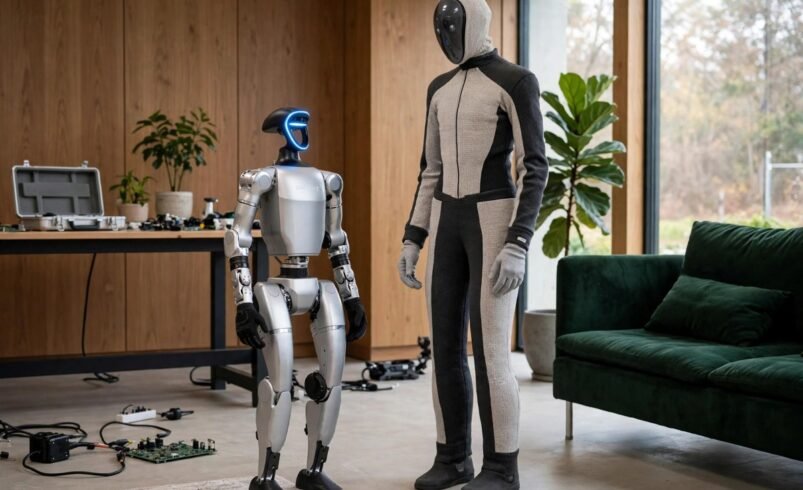
Unitree G1 vs 1X NEO is the most useful humanoid robot comparison you can make in 2026, because these are the two machines an ordinary buyer can actually order. One is a compact research platform built for labs and developers. The other is a soft, home-focused robot built to live with people. This research-based comparison uses published specs and maker pricing to show which one fits your goal.
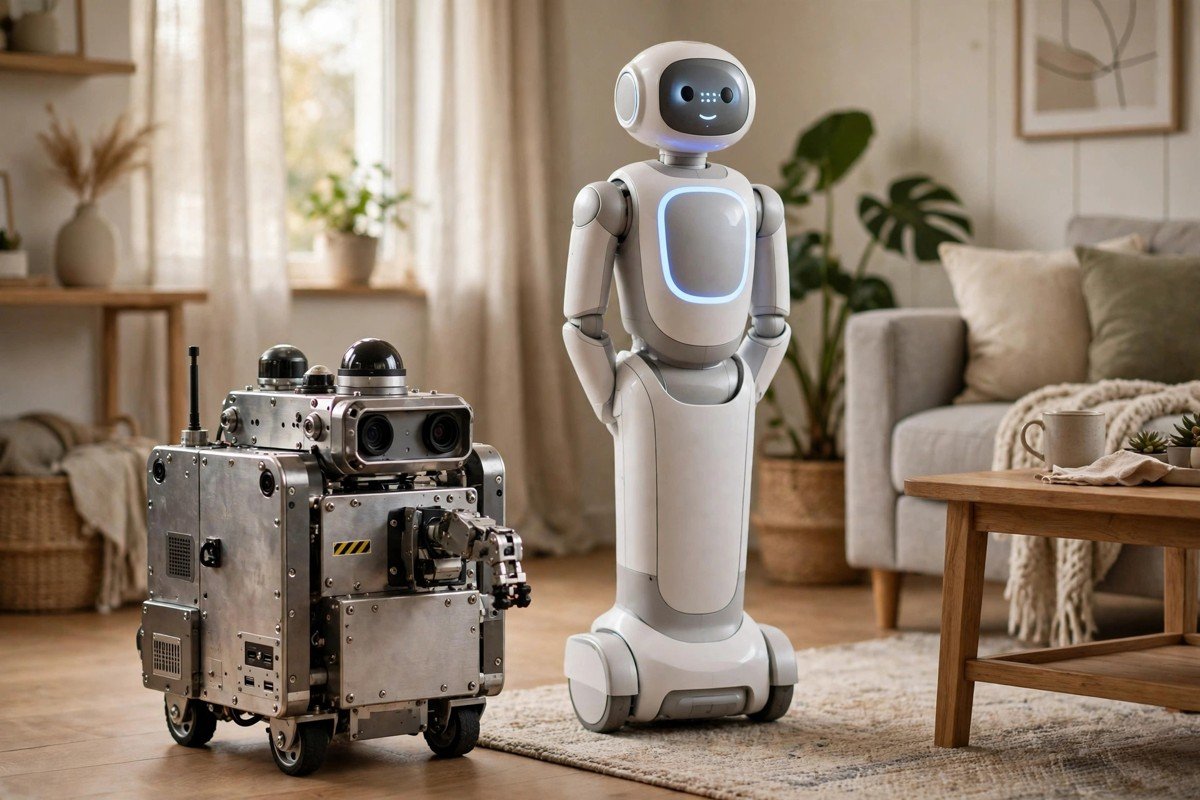
The headline difference is purpose. The G1 is a machine you program, demonstrate and experiment with. NEO is a machine you ask to help around the house. Everything else, from size to price to battery life, follows from that split.
| Feature | Unitree G1 | 1X NEO |
|---|---|---|
| Built for | Research, education and development | Home help and everyday chores |
| Height | About 132 cm | About 167 cm |
| Weight | About 35 kg | About 30 kg |
| Walking speed | Up to 2 m/s | About 1.4 m/s |
| Battery life | About 2 hours per charge | Up to 4 hours reported, with self-charging |
| Strength | Arm load of about 2 to 3 kg | Lifts up to 70 kg, carries 25 kg |
| Degrees of freedom | 23 standard, up to 43 in EDU versions | 22 per hand |
| Key sensing | 3D LiDAR and depth camera | Vision, audio and memory system |
| Public price | From about $13,500 for the base model | $20,000 or $499 per month |
| Availability | Orderable now, backorders reported | Pre-order, US deliveries planned for 2026 |
The G1 comes from a company already known for agile robot dogs and fast-moving research machines. It is small, at roughly the height of a ten-year-old child, and it is famous for dynamic movement: fast walking, balancing, flips and choreographed routines. That agility is the point: the G1 is a platform for embodied AI research, not a household helper.
Its sensing setup suits that job. A 3D LiDAR and depth camera help it map a room and track obstacles, which matters far more in a lab than in a living room. For a developer, the honest catch is the edition trap. The base G1 does not support secondary development, which means no SDK and no custom code. If you want to program the robot yourself, you need an EDU configuration, priced on application through resellers, with reported figures from about $43,900 to $73,900. If you already work with an AI coding assistant and you want a physical machine to test ideas on, the G1 is the only option here that ships to you now, but buy the edition that matches your plan, not just the cheapest headline price.
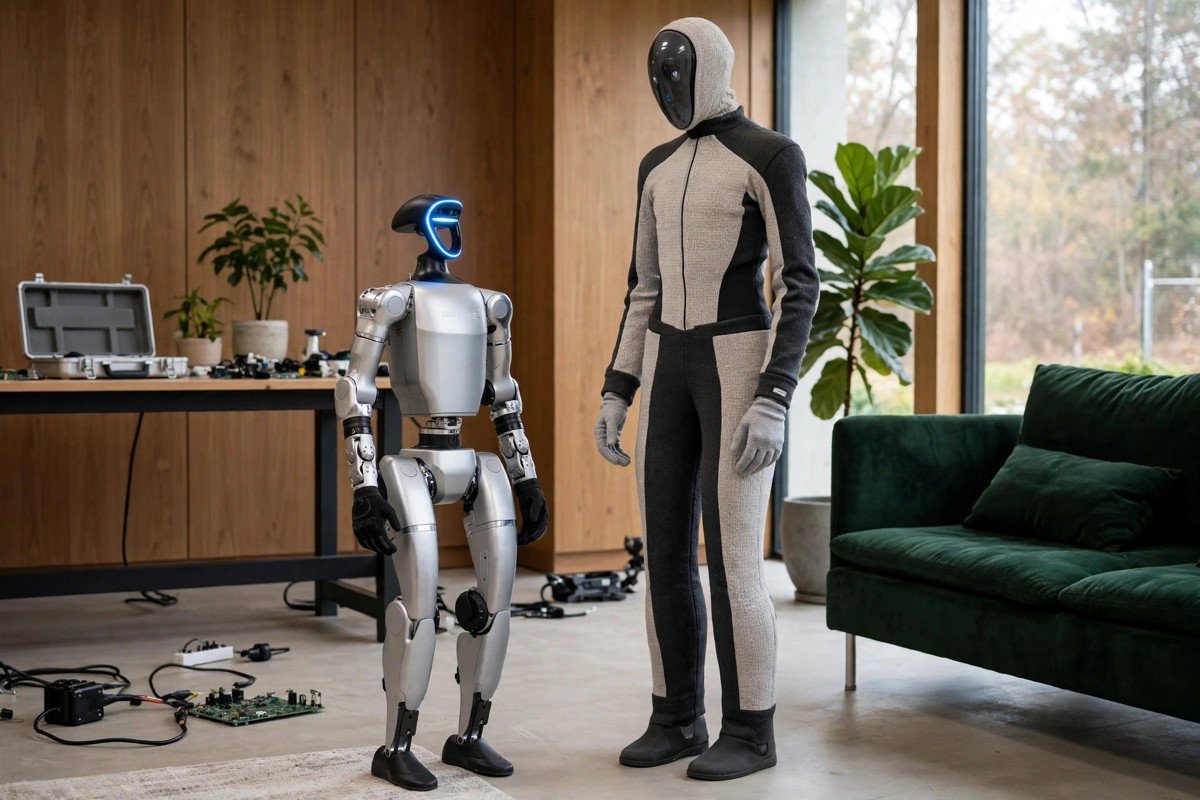
NEO is built for the opposite job. It is a full-size, soft-bodied robot designed to share a home with people, and the only humanoid here sold as a consumer product rather than a research tool. Its tendon-driven actuation works a little like muscles, giving it quiet, compliant movement instead of the stiff motion of an industrial machine.
At about 167 cm tall and only 30 kg, NEO is deliberately light for a machine of its size. That lightness is a safety choice: a robot that works near children and pets should not be heavy, hard or loud. 1X reports a noise level of just 22 dB and a soft outer body made from a custom lattice polymer that reduces injury risk if it bumps into someone.
NEO is also the only robot here with a home-service model behind it. It arrives with basic abilities such as opening doors, fetching items and turning off lights, plus a Chores feature for scheduled tasks like folding laundry and tidying rooms. For tasks it does not yet know, a remote 1X Expert can guide it, and the robot learns from that session. If you already follow best AI robot vacuum guides, think of NEO as the next step up: from a single-purpose floor cleaner to a general-purpose home helper, still early, but aimed at real households.

Size tells you a lot about intent. The G1 is compact and metal-framed, built to survive falls, shoves and repeated experiments. Its small size makes it easier to transport and safer to handle in a lab, but it cannot reach high shelves or move like an adult-sized helper. NEO is adult-sized on purpose, because a home robot needs to reach kitchen counters and open standard doors, and its soft body and tendon drive are genuine safety features for a machine that will share space with people who are not trained to work around robots.
On paper, NEO is far stronger. It can lift up to 70 kg and carry 25 kg, which covers moving furniture, carrying groceries and handling laundry baskets. The G1 manages an arm load of only about 2 to 3 kg, which suits waving, gesturing and light manipulation demos, but not household lifting. Dexterity is closer: NEO has five-fingered hands with 22 degrees of freedom per hand for folding, gripping and handling fragile objects, while the G1 offers hand options from a simple two-fingered gripper up to a five-fingered dexterous hand, but only in higher EDU configurations.
Neither robot is fully autonomous yet, and any comparison that claims otherwise is misleading. NEO combines vision, language and memory through 1X’s Redwood AI system, and it can hold a conversation and follow a schedule. But unfamiliar tasks still route to a remote human Expert, so early buyers are really buying supervised autonomy that should improve over time. The G1 leans the other way: it is largely teleoperated or scripted, controlled through motion capture or VR interfaces, and it learns through imitation. That makes it excellent for collecting movement data, but it will not tidy your home on its own.
Both robots also depend on the same wider shift: AI moving onto the device instead of living only in the cloud. Our guide to what is edge AI and why it matters explains why on-device processing matters for robots that must react in real time, and the same logic applies to running AI models locally vs in the cloud.
Pricing is where buyers get caught out, because headline prices hide edition differences and channel spreads. Published maker-store checks report the base G1 at about $13,500 direct, with the same machine listed around $17,990 on Amazon US and $16,000 to $21,600 through dealers. Add freight and import duties on top if you are outside China, and remember the base model cannot be programmed.
NEO is simpler to price but harder to get. Early access costs $20,000 outright or $499 per month, with a $200 refundable deposit, and 1X has committed to US home deliveries during 2026. That subscription model is genuinely new for humanoids: it turns a large capital bet into a monthly service, which suits a first-generation product whose abilities will grow through software updates. The risk is that no long public delivery track record exists yet, so early buyers are trusting a roadmap, not a proven fleet.
Buy the Unitree G1 if you are a researcher, student, educator or developer who wants a humanoid platform now, and you are happy to buy the EDU edition if programming matters to you. It is cheaper, it ships today, and its sensing and movement make it a serious lab tool.
Buy the 1X NEO if you want a home robot and you are comfortable being an early adopter. It is the only option built for household safety, conversation and chores, and its subscription option lowers the barrier to trying a technology that is still maturing. Do not buy it expecting a finished, fully autonomous housekeeper in 2026, because that product does not exist yet from any maker.
If you are torn, let your use case decide. A lab buys the G1. A household buys NEO. A buyer who wants both should wait, because no single humanoid in 2026 does both jobs well. For a wider field comparison, see this Tesla Optimus vs Unitree G1, NEO and Digit comparison.
NEO, by a clear margin. It is adult-sized, soft, quiet and designed for chores, conversation and safe interaction with people. The G1 is a research platform that is too small, too limited in lifting and not designed for unsupervised home tasks.
Yes, the base G1 is orderable, though backorders have been reported. Remember that the base model does not support secondary development, so developers should price an EDU configuration before committing.
1X has committed to US home deliveries during 2026 for early-access buyers, with wider expansion planned later. Delivery dates for a first-generation robot can slip, so treat the timeline as a plan, not a guarantee.
At headline prices, yes: about $13,500 for the base G1 against $20,000 for NEO. The comparison changes if you need to program the G1, since EDU editions cost far more.
Not in 2026. NEO still relies on remote Expert guidance for unfamiliar tasks, and the G1 is largely teleoperated or scripted. Neither is a finished replacement for human help yet.
Unitree G1 vs 1X NEO is not really a fight between two similar robots. It is a choice between two different futures: the G1 represents the research path, where humans drive, program and study the robot, while NEO represents the consumer path, where the robot gradually learns to help around the home. Buy the G1 for the lab, buy NEO for the living room, and keep your expectations honest about what first-generation humanoids can do.